Introduction
A Complete Guide for Parents
Every parent wants their child to be focused, confident, and academically strong. Across many Indian households, gemstones have long been used as gentle emotional supports for children during their learning years. While gemstones do not improve marks or intelligence on their own, they are often believed to help children feel calmer, more grounded, and more motivated.
This guide explains the most recommended gemstones for children, how to choose them, the right age and formats, and the common myths parents should avoid. It is written in a practical, simple, and non-superstitious manner.
Why Do Parents Choose Gemstones for Children?
Parents generally turn to gemstones for five main reasons:
1. Improving concentration
Modern children face constant distractions from screens, gadgets, and overstimulation. Many parents look for gentle aids that may help their child stay mentally centred.
2. Reducing fear and anxiety
School pressure, exam stress, competition, and expectations can make children anxious. Calming gemstones such as amethyst and citrine are often believed to help.
3. Boosting memory and confidence
Some children understand concepts but lack confidence or forget things easily. Gemstones sometimes serve as symbolic anchors that make them feel supported.
4. Balancing emotions
A calm child absorbs information better. Parents often feel gemstones provide emotional grounding that helps with daily study discipline.
5. Cultural and family tradition
For many families, gifting a gemstone is part of tradition. It connects children to values, rituals, and generational beliefs.
It is important to remember gemstones are supportive tools, not replacements for good teaching, sufficient rest, a healthy home environment, and regular study routines.
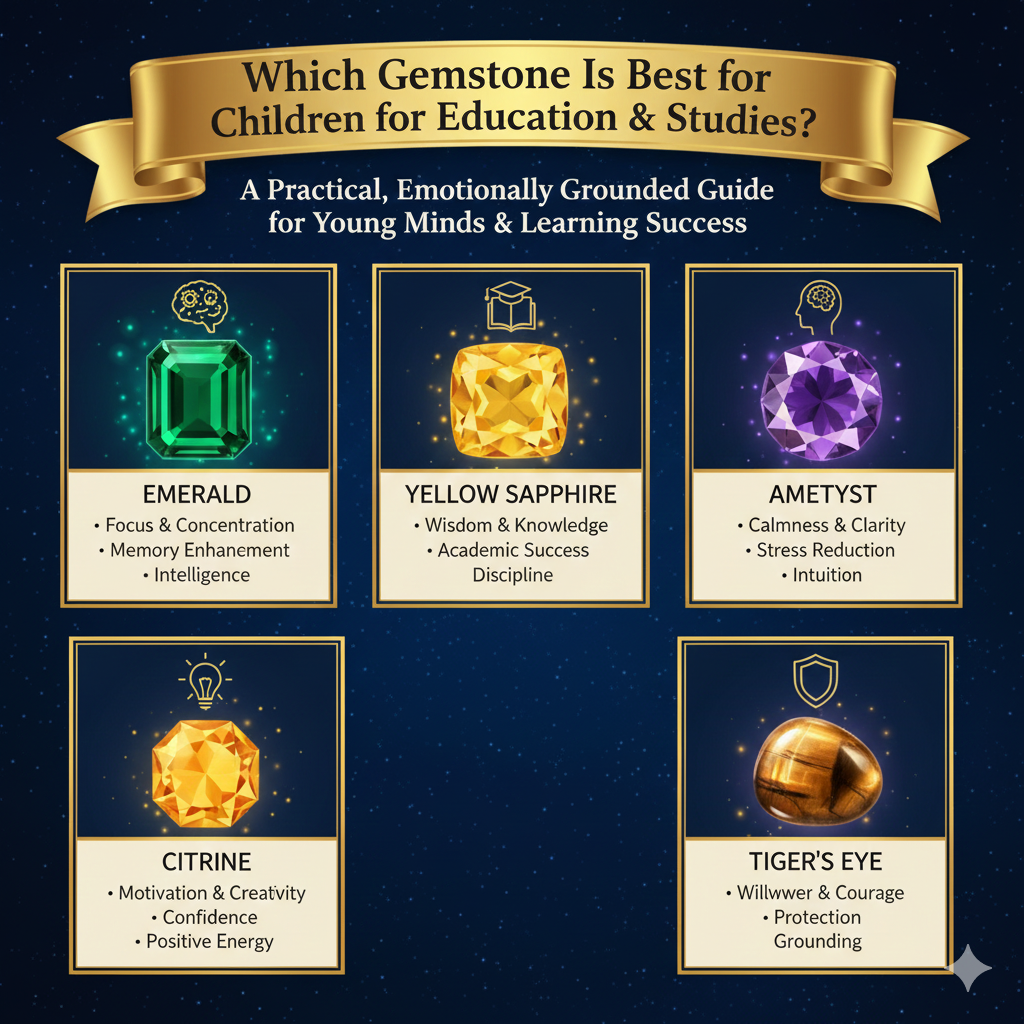
Top 5 Gemstones for Children’s Education and Studies
Below are the gemstones commonly recommended for enhancing focus, clarity, and emotional balance in children.
1. Yellow Sapphire (Pukhraj)
For wisdom, memory, stability, and academic growth
In traditional astrology, Yellow Sapphire represents Jupiter, the planet of knowledge, learning, and steady growth.
Why parents choose it:
-
Supports long-term academic discipline
-
Enhances memory and understanding
-
Encourages calm thinking
-
Helps children who feel mentally scattered or disinterested in studies
Recommended age:
7 years and above
Best format:
A small pendant in gold or silver. Rings are not advisable for young children.
2. Emerald (Panna)
For sharp intelligence, clarity, communication, and comprehension
Emerald is linked to Mercury, the planet of intellect, logic, communication, and analytical ability.
Best for children who:
-
Struggle to grasp concepts
-
Forget lessons quickly
-
Have weak communication or expression
-
Feel mentally disorganised
Emerald is often preferred for students preparing for competitive or concept-heavy examinations.
Why it is popular:
It is widely known as the stone of intellect and is associated with enhanced grasping power and reasoning.
3. Amethyst (Jamunia)
For calmness, focus, emotional stability, and reduced exam anxiety
Amethyst is one of the safest and mildest gemstones for children.
Why parents prefer it:
-
Helps reduce exam fear and emotional stress
-
Promotes better sleep
-
Encourages steady focus during study time
-
Ideal for anxious or sensitive children
It has no strong astrological impact, making it suitable for children of all ages.
4. Citrine (Sunehla)
For motivation, confidence, and a positive learning attitude
Many children study well but lack self-belief. Citrine is often associated with emotional upliftment and confidence.
Best for children who:
-
Get discouraged easily
-
Are shy or withdrawn in class
-
Fear making mistakes
-
Need motivation to stay consistent
Citrine is known for bringing warmth, optimism, and a positive mindset into the child’s learning routine.
5. Tiger’s Eye
For concentration, discipline, and reducing distraction
With today’s screen-dominated lifestyle, many children struggle with short attention spans. Tiger’s Eye is considered a grounding stone that helps channel focus and discipline.
Benefits include:
-
Better attention span
-
Increased determination
-
Reduced distractions
-
Improved willpower during study hours
It is not an astrological stone, making it safe and neutral for everyday use.
How to Choose the Right Gemstone for Your Child
Selecting a gemstone for children requires thoughtful consideration. Here are the essential points to remember:
1. Choose mild stones for younger children
Stones such as amethyst, citrine, and tiger’s eye are safe and gentle.
Avoid strong astrological stones (like blue sapphire, ruby, or cat’s eye) unless recommended by a professional astrologer.
2. Prefer pendants over rings
Rings can feel uncomfortable, may slip off, and can get damaged.
Pendants are safe, lightweight, and practical for school-going children.
3. Ensure the stone is natural and certified
Many shops sell synthetic or dyed stones, which hold no emotional or astrological value.
Look for:
-
Natural gemstones
-
Authentic certification
-
Clear disclosure of treatments
4. Carat size is not crucial
Children do not need large stones. Even a small 1 to 3 carat gemstone is sufficient for emotional support.
5. Prioritise comfort
Monitor how your child feels while wearing the gemstone. There should be no irritation, heaviness, or resistance.
Common Myths About Gemstones for Children
Myth 1: Gemstones increase marks
No gemstone can directly improve academic scores.
Their role is emotional and psychological, not academic.
Myth 2: Any yellow stone is Pukhraj
Many stones sold as “pukhraj” are actually citrine, yellow topaz, or dyed quartz.
Always check certification.
Myth 3: Children must wear gemstones to succeed
Gemstones are optional.
Good study habits, supportive parenting, and a positive environment matter far more.
Myth 4: Bigger stones give better results
For children, small stones are safer and equally effective.
Quick Summary: Which Gemstone Should You Choose?
| Child’s Need | Suggested Gemstone |
|---|---|
| Lack of concentration | Tiger’s Eye or Amethyst |
| Weak memory or poor grasping | Emerald |
| Academic discipline and stability | Yellow Sapphire |
| Low confidence or shyness | Citrine |
| Anxiety, stress, overthinking | Amethyst |
| Hyperactivity or distraction | Tiger’s Eye |
This summary helps parents choose based on the child’s emotional and academic needs.
The Emotional and Psychological Perspective
Even though science does not confirm gemstone effects, psychology offers meaningful explanations:
1. Placebo confidence
Believing a gemstone is helpful can make a child feel supported and more capable.
2. Symbolic responsibility
Wearing a gemstone often gives children a sense of maturity and discipline.
3. Emotional grounding
Calmness reduces stress, and a relaxed mind learns better.
4. Cultural connection
Wearing gemstones links children with family traditions, giving them a sense of belonging.
5. Routine and stability
Wearing a pendant daily becomes a small ritual that promotes consistency.
Final Thoughts: Do Gemstones Truly Help Children in Studies?
Here is the balanced answer:
Gemstones do not create intelligence or guarantee academic success.
However, they can support the emotional and mental environment required for effective learning.
They may help with:
-
Improved focus
-
Better emotional balance
-
Reduced anxiety
-
Greater confidence
-
More disciplined study habits
The best outcomes come from combining gemstones with good study habits, supportive parenting, proper rest, nutrition, and a healthy learning environment.
Used responsibly, gemstones can be a meaningful accessory that supports your child’s overall growth without causing harm.