
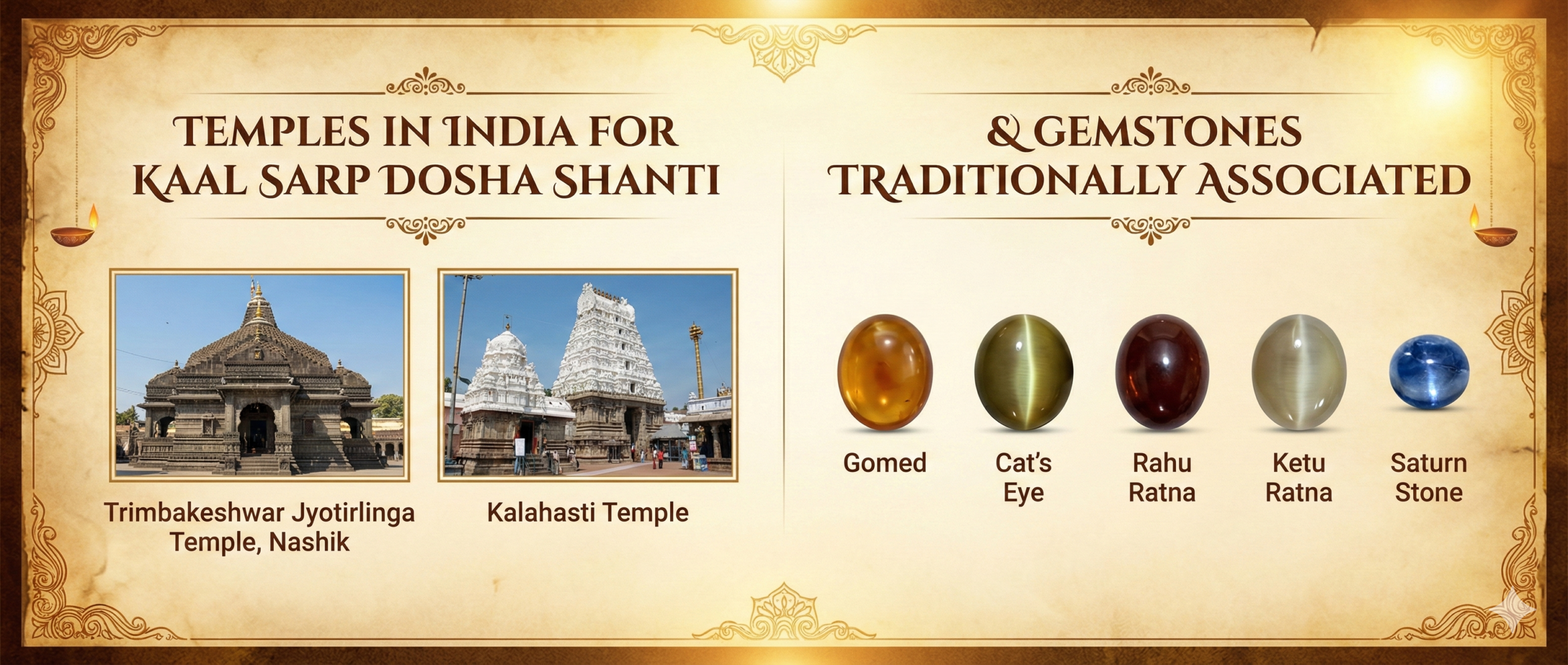
Gemstones Traditionally Associated with Kaal Sarp Dosha
Kaal Sarp Dosha occurs when all seven planets are placed between Rahu and Ketu in a birth chart. It is traditionally associated with blockages, sudden instability, fear, delays, and karmic pressure.
In classical Vedic practice, shanti (pacification) is performed first through puja, discipline, and charity. Gemstones are considered supportive tools — not replacements for remedies.
Most Revered Temples for Kaal Sarp Dosha Shanti
1. Trimbakeshwar Temple
Location: Nashik, Maharashtra
Why it is important
-
Considered the most powerful site for Kaal Sarp Shanti
-
One of the 12 Jyotirlingas of Lord Shiva
-
Rahu–Ketu Shanti puja performed daily by lineage priests
Believed Benefits
-
Reduction in repeated life blockages
-
Relief from ancestral karmic patterns
-
Mental stability during Rahu periods
2. Sri Kalahasti Temple
Location: Chittoor district, Andhra Pradesh
Why it is important
-
Known as the Rahu–Ketu Kshetra
-
Strongly associated with shadow planets
-
Air (Vayu) element temple among Pancha Bhoota sthalas
Believed Benefits
-
Relief from Rahu–Ketu afflictions
-
Career and relationship stability
3. Mahakaleshwar Jyotirlinga
Location: Ujjain, Madhya Pradesh
Why it is important
-
Lord Shiva as Mahakaal (master of time)
-
Kaal Sarp is a time-based karmic dosha, making Ujjain significant
Believed Benefits
-
Fear reduction
-
Stability during sudden life changes
4. Nageshwar Jyotirlinga
Location: Near Dwarka, Gujarat
Why it is important
-
“Nageshwar” means Lord of Serpents
-
Associated with liberation from snake-related karmas
Believed Benefits
-
Protection from hidden enemies
-
Relief from unexplained fears
5. Kukke Subramanya Temple
Location: Dakshina Kannada, Karnataka
Why it is important
-
Dedicated to Lord Subramanya (associated with serpents)
-
Famous for Sarpa Samskara and Naga Dosha rituals
Believed Benefits
-
Ancestral karmic cleansing
-
Fertility and lineage-related relief
Gemstones Associated with Kaal Sarp Dosha
Important:
Kaal Sarp Dosha is Rahu–Ketu dominant. Direct gemstones (Gomed and Cat’s Eye) should never be worn without expert guidance.
Primary Shadow Planet Stones
1. Gomed (Hessonite Garnet) – Rahu
Associated Effects
-
Reduces confusion, fear, illusion
-
Stabilises sudden ups and downs
Wear Only If
-
Rahu is beneficial or supportive in the chart
-
Recommended by a competent astrologer
Blind wearing can increase instability.
2. Cat’s Eye (Chrysoberyl) – Ketu
Associated Effects
-
Sharpens intuition
-
Helps detach from fear and obsession
Not advised during emotional turbulence.
Safer Supportive Gemstones (Often Preferred)
These stones do not directly activate Rahu–Ketu but help balance life during Kaal Sarp periods.
Pukhraj (Yellow Sapphire) – Jupiter
-
Provides wisdom and guidance
-
Stabilises decision-making
-
Often prescribed when Kaal Sarp causes confusion
Panna (Emerald) – Mercury
-
Improves clarity and communication
-
Helpful in business, studies, and contracts
Moti (Pearl) – Moon
-
Calms anxiety and fear
-
Useful when Kaal Sarp creates mental stress
These are often chosen instead of Rahu–Ketu stones.
Traditional Balanced Approach
Classical practitioners recommend this sequence:
-
Shanti Puja at a recognised temple
-
Lifestyle discipline (charity, truthfulness, patience)
-
Supportive gemstone if required
-
Avoid aggressive Rahu–Ketu stones unless chart-tested
Final Guidance
Kaal Sarp Dosha is not considered a punishment. It is viewed as a karmic pressure period meant to mature the soul.
Temples cleanse karmic weight.
Discipline aligns with Shiva and Saturn principles.
Gemstones support the process — they are not shortcuts.